
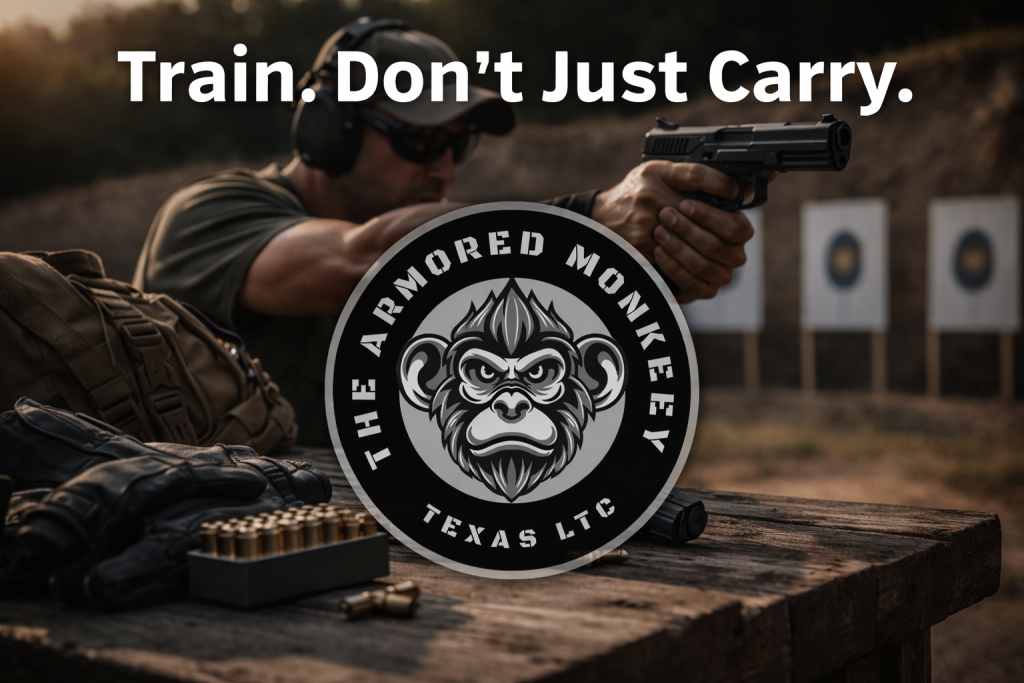
As a Texas LTC and NRA instructor, I see this more often than most people realize.
Someone will buy a handgun.
They’ll invest in a good holster.
They’ll get their License to Carry.
They’ll start carrying every day.
But they’ve never really trained with it.
Some have never even fired it.
Let me say this clearly:
Carrying a firearm without training is not preparedness — it’s false confidence.
Owning a Tool vs. Knowing How to Use It
A firearm is a tool.
And like any tool, it requires skill.
You wouldn’t buy a chainsaw and assume you could operate it safely without practice.
You wouldn’t buy a fire extinguisher and never learn how to use it.
Yet some people carry a defensive firearm hoping they’ll “figure it out” if the moment ever comes.
In a real defensive encounter, you do not rise to the occasion.
You fall to your level of training.
Stress Changes Everything
On the range, it’s calm.
In a real defensive situation, it’s not.
Your heart rate spikes.
Your vision narrows.
Fine motor skills deteriorate.
Decision-making compresses into seconds.
If you have not practiced:
- Drawing safely
- Acquiring your sights
- Managing recoil
- Clearing malfunctions
- Shooting accurately under time
…you are relying on hope instead of preparation.
Hope is not a plan.
Confidence Comes From Competence
There is a huge difference between feeling confident and being competent.
Competence is built through:
- Repetition
- Coaching
- Correcting bad habits
- Practicing realistic scenarios
- Understanding the legal responsibilities that come with defensive force
When you train, you gain clarity.
You understand your weapon.
You understand your limitations.
And that kind of confidence is steady — not emotional.
Responsibility Matters in Texas
Here in Texas, carrying a handgun is both a right and a serious responsibility.
Just because you can carry doesn’t automatically mean you are prepared to.
Training protects:
- You
- Your family
- The innocent people around you
- Your legal future
A defensive shooting isn’t just about marksmanship. It’s about judgment, discipline, and control.
Training builds all three.
Some Hard Truth
If you carry a firearm you’ve never shot, you don’t really know:
- If it functions reliably
- If it fits your hand properly
- If you can control it under recoil
- If your defensive ammunition cycles correctly
- If you can hit what you’re aiming at
That’s not being prepared.
That’s gambling.
And this is not something to gamble with.
What Real Training Looks Like
Good training isn’t just standing in a lane punching holes in paper.
It includes:
- Proper grip and stance
- Trigger control
- Drawing from concealment
- Movement
- Malfunction drills
- Situational awareness
- Understanding Texas law regarding use of force
That’s why I offer:
- NRA Basic Pistol
- Texas License to Carry (LTC) classes
- Personal one-on-one instruction
Every class is built around safety, skill, and responsibility — not ego.
Final Thought
Carrying a firearm is a serious decision.
It deserves serious preparation.
If you’re going to carry, train.
If you’re going to protect, practice.
If you’re going to accept the responsibility, commit to doing it the right way.
Because when seconds matter, you won’t wish you had saved time or money.
You’ll wish you had trained.